Applying for a UK visitor visa as a Turkish national presents unique challenges that many applicants underestimate. Higher refusal rates for Turkish citizens compared to global averages create confusion and frustration. Understanding the specific requirements, documentation standards, and application process is essential for success. This guide clarifies the key factors that determine approval, helping you prepare a strong application that demonstrates genuine visitor intentions and meets UK immigration standards.
Table of Contents
- Understanding The UK Visitor Visa
- Key Requirements And How To Prove Your Eligibility
- Application Process Step-By-Step And Addressing Common Difficulties
- Comparing Visitor Visa With Other UK Visas
- How Metin.London Can Support Your UK Visitor Visa Application
- Frequently Asked Questions
Key takeaways
| Point | Details |
|---|---|
| Refusal rates matter | Turkish applicants face higher scrutiny due to Turkey’s risk profile in UK visa assessments. |
| Financial proof is critical | Comprehensive evidence of stable income, savings, and employment significantly improves approval chances. |
| Demonstrate return intentions | Strong ties to Turkey through property, family, or employment prove you will leave the UK after your visit. |
| Document quality counts | Well-organised, translated, and complete documentation prevents delays and strengthens your application. |
| Professional support helps | Expert guidance addresses Turkish-specific challenges and improves application preparation quality. |
Understanding the UK visitor visa
The UK visitor visa allows Turkish nationals to enter the United Kingdom for tourism, family visits, or short-term stays up to six months. This visa category serves individuals who want to explore British culture, visit relatives, attend events, or conduct brief business activities that don’t constitute employment. UK Visitor Visa applications from Turkey have specific requirements and potential pitfalls due to the country’s risk profile, making thorough preparation essential.
Turkish applicants must understand that visitor visas differ significantly from other UK immigration routes. The visa prohibits work, study exceeding six months, or accessing public funds. Immigration officials assess each application against strict criteria to ensure applicants genuinely intend temporary visits rather than unauthorised stays.
Permitted activities on a visitor visa include:
- Tourism and sightseeing throughout England, Scotland, Wales, and Northern Ireland
- Visiting family members or friends residing in the UK
- Attending business meetings, conferences, or training events without paid employment
- Participating in short courses or academic programmes under six months
- Receiving private medical treatment with proper arrangements and payment proof
The application context for Turkish nationals requires extra attention to detail. UK immigration authorities carefully scrutinise applications from countries with higher overstay rates or immigration violations. This doesn’t mean approval is impossible, but it demands stronger evidence of financial stability, employment ties, and genuine visitor intentions. Understanding these expectations helps you prepare documentation that addresses potential concerns proactively.
Choosing the correct visa type prevents costly mistakes. Many applicants confuse visitor visas with other types of UK visas designed for work, study, or permanent residence. Applying for the wrong category guarantees refusal and wastes application fees. If your purpose involves employment or extended education, you need different visa routes entirely.
Key requirements and how to prove your eligibility
Successful UK visitor visa applications hinge on demonstrating three core elements: financial capacity, strong ties to Turkey, and genuine temporary visit intentions. Applicants must demonstrate they are genuine visitors, with sufficient funds and intention to leave the UK. Immigration caseworkers evaluate these factors rigorously for Turkish applicants.
Financial stability requires comprehensive evidence showing you can afford your UK trip without working or accessing public benefits. Provide bank statements covering at least six months, employment letters confirming salary and position, tax returns, and property ownership documents. Sponsored visits require additional proof that your sponsor can financially support you, including their bank statements, employment verification, and a formal sponsorship letter.
Demonstrating ties to Turkey addresses the core concern that you might overstay your visa. Strong evidence includes:
- Permanent employment contracts with established Turkish companies
- Property ownership documents showing real estate investments in Turkey
- Family relationships evidenced through marriage certificates, birth certificates, or custody documents
- Business ownership registration and tax records for entrepreneurs
- University enrolment confirmation for students on break
Your travel plans must be detailed and credible. Book accommodation before applying or provide invitation letters from UK hosts with their address and contact details. Create a realistic itinerary showing planned activities, travel dates, and locations you’ll visit. Vague or inconsistent plans raise red flags about your true intentions.
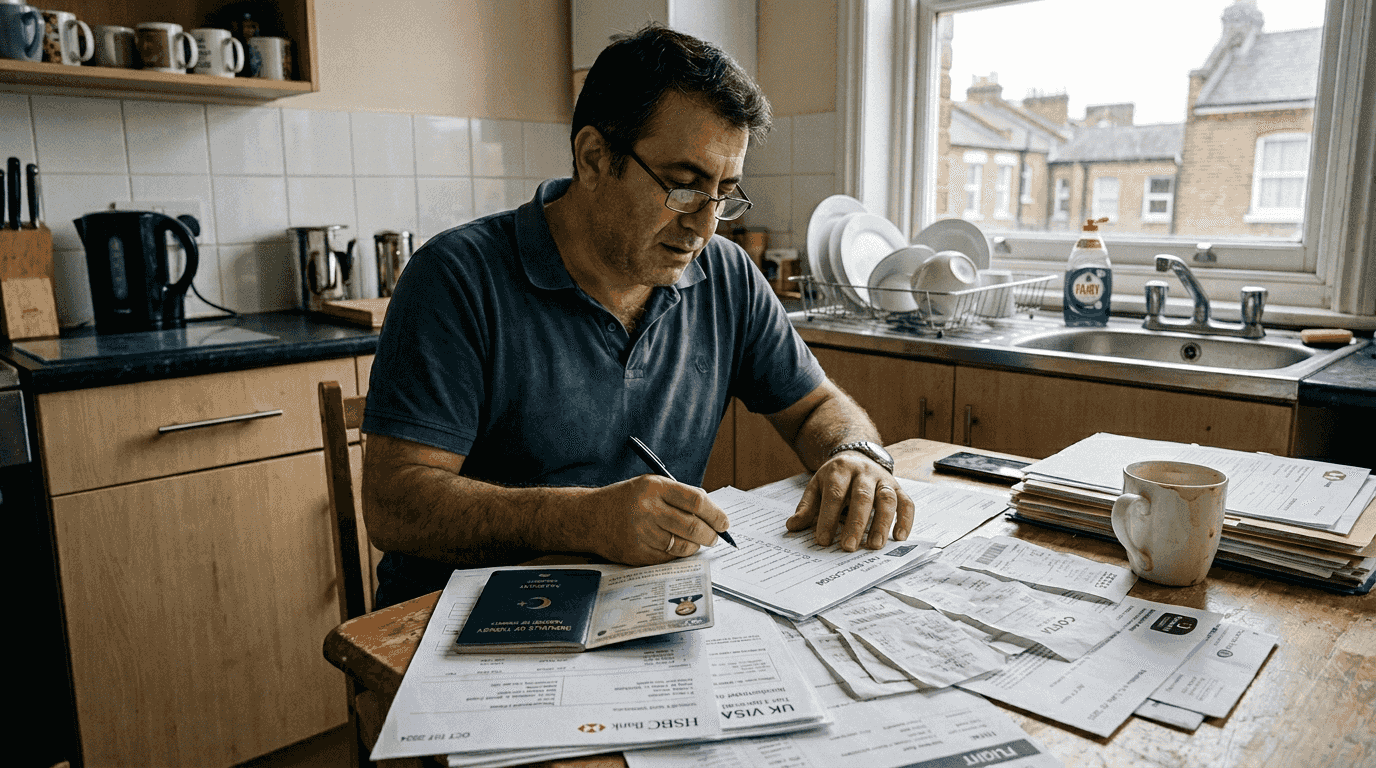
Common pitfalls leading to refusals include insufficient financial documentation, unexplained income sources, weak employment ties, or contradictory information across documents. Applicants who cannot demonstrate stable income or show sudden large bank deposits face heightened scrutiny. Missing translations for Turkish documents or incomplete application forms also trigger refusals.
Pro Tip: Organise your documents chronologically with clear labels in English. Create a cover letter summarising your application, explaining your visit purpose, and highlighting key supporting evidence. This professional presentation helps caseworkers process your application efficiently and demonstrates attention to detail. Include certified translations for all Turkish documents, ensuring translators provide their credentials and contact information.
Understanding UK tourist visa documents requirements prevents last-minute scrambles. Start gathering evidence at least two months before your planned travel date. This timeline allows you to address any missing documentation or clarify financial records with your bank.
Application process step-by-step and addressing common difficulties
The UK visitor visa application process involves several sequential steps that require careful attention and thorough preparation. Following this structured approach minimises errors and improves your chances of approval.
- Gather all required documents including passport, photographs, financial evidence, employment letters, and travel plans before starting your online application.
- Complete the online visa application form at the official UK government website, providing accurate information that matches your supporting documents exactly.
- Pay the visa application fee using a valid credit or debit card, keeping the payment confirmation for your records.
- Schedule your biometric appointment at the nearest visa application centre in Turkey, choosing a date that allows sufficient processing time before your travel.
- Attend your biometric appointment with all original documents, printed application confirmation, and passport, arriving 15 minutes early.
- Submit your passport and supporting documents to the visa application centre, receiving a collection receipt for tracking purposes.
- Wait for processing, typically taking three weeks but potentially longer during peak seasons or if additional verification is needed.
- Collect your passport with the visa decision or arrange courier delivery if you selected that service option.
Processing duration varies based on application volume, time of year, and individual case complexity. Standard processing takes approximately 15 working days, but Turkish applicants should allow four to six weeks for potential delays. Priority services offering faster decisions cost significantly more and don’t guarantee approval.
Turkish applicants should pay close attention to providing comprehensive documentation to prove their financial stability and ties to Turkey to avoid visa refusal. Common reasons for delays include incomplete documentation, requests for additional evidence, or background verification checks. Refusals often result from insufficient financial proof, weak ties to Turkey, or inconsistent information across documents.
Pro Tip: Prepare for potential interview requests by rehearsing clear, honest answers about your visit purpose, financial situation, and return plans. Immigration officers may contact you by phone or email requesting clarification. Respond promptly with concise, truthful information that aligns with your written application. Never provide false information, as this guarantees refusal and potential future visa bans.
“The key to a successful visitor visa application lies in demonstrating genuine temporary visit intentions through comprehensive, consistent documentation that addresses potential concerns proactively.”
If you’re considering longer-term UK opportunities, understanding pathways like the skilled worker visa guide helps you plan future immigration options. However, attempting to use a visitor visa for purposes requiring different visa types will result in refusal and complicate future applications.
Comparing visitor visa with other UK visas
Understanding how visitor visas differ from other UK immigration routes prevents costly application mistakes and helps you choose the correct pathway. Many Turkish applicants confuse visitor visas with tourist visas, family visas, or work permits, leading to refusals and wasted fees.
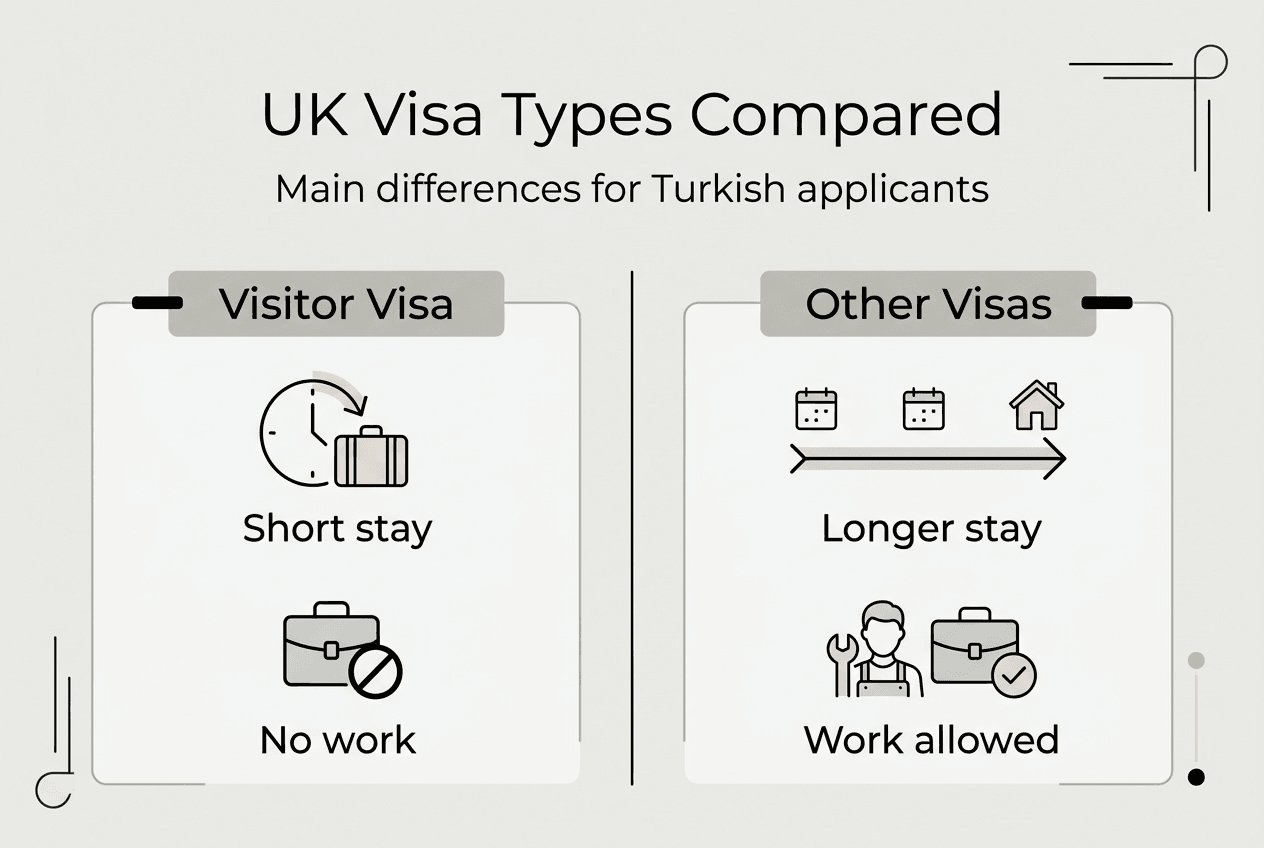
The terms “visitor visa” and “tourist visa” are often used interchangeably, but technically, the UK uses “Standard Visitor visa” as the official designation. This visa covers tourism, family visits, business activities, and medical treatment. There’s no separate “tourist visa” category, though many people use this informal term when referring to leisure travel.
Family and dependent visas serve entirely different purposes than visitor visas. The guidance highlights the importance of assessing the applicant’s intention to leave the UK at the end of their visit. Family visas allow extended stays, work rights, and potential settlement, whilst visitor visas prohibit these activities. If you’re joining a UK resident spouse or partner, you need a family visa, not a visitor visa.
| Visa Type | Duration | Work Rights | Study Rights | Settlement Path |
|---|---|---|---|---|
| Visitor Visa | Up to 6 months | No | Limited (under 6 months) | No |
| Family Visa | 2.5 to 5 years | Yes | Yes | Yes |
| Skilled Worker | Up to 5 years | Yes (sponsored) | Yes | Yes |
| Student Visa | Course duration | Limited (20 hrs/week) | Yes | Potentially |
Work visas including Skilled Worker, Health and Care Worker, or Global Talent routes require employer sponsorship and meet specific skill and salary thresholds. These visas allow extended stays and lead to permanent residence. Visitor visas prohibit any paid or unpaid work, regardless of duration. Attempting to work on a visitor visa constitutes a serious immigration violation resulting in deportation and future entry bans.
Student visas permit full-time study at licensed UK institutions with limited work rights during term and full-time work during holidays. Visitor visas allow only short courses under six months without work privileges. If you plan serious academic study, apply for a student visa instead.
Decision factors for choosing the correct visa include:
- Visit duration and frequency: visitor visas suit short, occasional trips
- Activity purpose: work and study require specific visa categories
- Settlement intentions: family and work visas offer permanent residence pathways
- Financial capacity: work visas require employer sponsorship whilst visitor visas need personal funds
- Eligibility criteria: each visa type has unique qualification requirements
Applying for the wrong visa type guarantees refusal and complicates future applications. Immigration officials view incorrect applications as evidence you don’t understand UK immigration rules or may have ulterior motives. If you’re uncertain which visa suits your circumstances, consider exploring self-sponsorship visa guide options for entrepreneurs or reviewing dependent visa guide requirements for family members.
How metin.london can support your UK visitor visa application
Navigating UK visitor visa requirements as a Turkish applicant demands expertise in immigration regulations and documentation standards. METIN.LONDON specialises in supporting Turkish nationals through every stage of their UK visa journey, addressing the unique challenges you face.
Our regulated immigration advisers provide personalised consultation services that assess your specific circumstances and identify potential application weaknesses before submission. We help you gather, organise, and present documentation that meets UK immigration standards whilst addressing concerns specific to Turkish applicants. Our team understands the heightened scrutiny Turkish applications receive and prepares evidence that proactively demonstrates your genuine visitor intentions.
Document preparation support includes reviewing financial evidence, employment verification, and travel plans to ensure consistency and completeness. We provide professional property inspection reports for UK visas that strengthen family visa applications when combined with visitor visa documentation. Interview readiness coaching prepares you for potential questions from immigration officers, building confidence and ensuring consistent, truthful responses.
Our comprehensive UK visa and recruitment services extend beyond visitor visas to work permits, family reunification, and settlement pathways. Whether you’re planning a short visit or exploring longer-term UK opportunities, our expert guidance simplifies complex immigration processes. Turkish applicants benefit from our cultural understanding and experience addressing common application pitfalls that lead to refusals. We also offer detailed support through our UK tourist visa guide resources, ensuring you understand every requirement before applying.
Frequently asked questions
What documents are essential for a UK visitor visa application?
You must provide a valid passport with at least six months validity, recent passport photographs, comprehensive bank statements covering six months, employment letters confirming your position and salary, and detailed travel plans including accommodation bookings. Additional evidence demonstrating ties to Turkey strengthens your application, such as property ownership documents, family relationship certificates, or business registration papers. All Turkish documents require certified English translations with translator credentials included.
How long does the UK visitor visa application process take for Turkish citizens?
Standard processing typically takes three weeks from biometric appointment completion, though Turkish applications may require four to six weeks due to additional verification checks. Peak travel seasons during summer and December holidays extend processing times further. Priority services offer faster decisions for additional fees but don’t guarantee approval. Allow at least two months between application submission and planned travel dates to accommodate potential delays or requests for additional documentation.
Can I work or study on a UK visitor visa?
No, UK visitor visas strictly prohibit paid or unpaid employment of any kind. You cannot undertake work placements, internships, or volunteer positions that would otherwise require payment. Study is limited to recreational courses or programmes under six months without formal qualifications. If you need to work or pursue academic qualifications, you must apply for appropriate UK visas for work and study such as Skilled Worker or Student visas before travelling.
What happens if my UK visitor visa application is refused?
You can reapply immediately with stronger supporting evidence addressing the refusal reasons detailed in your decision letter. Carefully review the specific concerns raised by immigration officials and gather additional documentation that directly addresses these issues. Many refused applicants benefit from professional immigration advice to identify application weaknesses and improve their resubmission. Repeated refusals without addressing underlying concerns waste fees and may indicate you need a different visa category entirely.