TL;DR:
- Student visas have the highest approval rate at 98%, making them the easiest for qualified applicants.
- Visitor visas are accessible with a 90% grant rate, suitable for short stays but do not permit work or study.
- Family and Skilled Worker visas offer pathways to UK settlement with high approval rates but require meeting specific eligibility and documentation criteria.
Choosing the right UK visa feels overwhelming when every route comes with its own rules, documents, and waiting times. As of March 2026, all Turkish nationals are classified as visa nationals, meaning no one travels to the UK without prior approval. The good news is that grant rates vary significantly by visa type, and some routes are statistically far more accessible than others. This article compares the main UK visa routes using real Home Office data, so you can make an informed decision based on evidence rather than guesswork.
Table of Contents
- How to evaluate UK visas for ease of access
- Student visa: The highest success rate (98%)
- Visitor visa: Accessible for short stays (90% grant rate)
- Family visa: A secure option for reunification (91% grant rate)
- Skilled worker visa: Viable for professionals
- Visa comparison table: Which route is easiest?
- A fresh perspective: The truth about ‘easy’ UK visas for Turkish applicants
- How METIN.LONDON can help with your UK visa application
- Frequently asked questions
Key Takeaways
| Point | Details |
|---|---|
| Student visa easiest | The UK Student visa offers a 98% success rate for Turkish applicants, with straightforward requirements. |
| Visitor visa high access | Turkish nationals enjoy a 90% grant rate for UK visitor visas, but must not work or study. |
| Family visa reliable | Family visas are granted in 91% of cases, enabling reunification when financial criteria are met. |
| Work visas possible | Skilled Worker visas are accessible for qualified professionals, though offer rates depend on sponsor and requirements. |
| Criteria matter most | Success depends on matching eligibility, documentation, and the latest rule changes for each visa type. |
How to evaluate UK visas for ease of access
Not all visas are created equal, and ‘easy’ means different things to different people. For a Turkish professional with a job offer, ease might mean a fast decision. For a student, it might mean minimal documentation. Before comparing routes, it helps to agree on what makes a visa genuinely accessible.
Here are the key criteria we use to assess each route:
- Grant rate: The percentage of applications that are approved. Higher is better.
- Documentation burden: How many supporting documents are required and how complex they are to obtain.
- Processing speed: Standard processing times from application to decision.
- Eligibility barriers: Whether you need a job offer, a sponsor, a specific qualification, or a minimum salary.
- Financial requirements: How much money you must demonstrate in your bank account or earn as income.
For Turkish applicants specifically, ties to Turkey (such as property, employment, or family) can strengthen a visitor visa application by showing you intend to return. For work and study visas, the focus shifts to whether you meet the sponsor and financial thresholds set by the Home Office.
One important baseline to understand: all visa applications require online submission and a biometrics appointment at a visa application centre. This applies regardless of which route you choose, so factor in travel time to your nearest centre when planning your timeline.
Pro Tip: Check your UK visa eligibility options before starting any application. Applying for the wrong visa category is one of the most common and costly mistakes Turkish applicants make.
With these criteria in mind, let us look at each route in order of accessibility.
Student visa: The highest success rate (98%)
If the numbers alone guided your decision, the UK Student visa would win every time. Student visas have a 98% grant rate for Turkish applicants, based on 5,997 applications in the year ending September 2025. That is the highest approval rate of any UK visa category.
98% grant rate for Turkish Student visa applicants (YE Sep 2025)
Why is the success rate so high? The answer lies in the structure of the route. Most of the eligibility work happens before you apply. Your university or college must be a licensed sponsor and will issue a Confirmation of Acceptance for Studies (CAS) only once you have met their academic and language requirements. By the time you submit your visa application, the hardest hurdles are already cleared.
To apply for a UK Student visa, you will typically need:
- A valid CAS number from a licensed UK educational institution
- Proof of funds to cover tuition fees and living costs (usually £1,334 per month for up to nine months in London)
- English language proficiency evidence (usually IELTS or equivalent)
- A valid passport and recent passport-sized photographs
- Tuberculosis (TB) test results if required
One change worth noting for 2026: restrictions on bringing dependants have tightened for most undergraduate and taught postgraduate students. Unless you are a government-sponsored student or enrolled on a research programme, you cannot bring a partner or children on your Student visa.
Pro Tip: If you are already in the UK on a Student visa and your course is ending, explore renewing a UK student visa or transitioning to a Graduate visa to stay and work after graduation.
The Student visa is genuinely the most accessible route for Turkish applicants who have secured a university place. The documentation is structured, the process is clear, and the approval rate reflects that.
Visitor visa: Accessible for short stays (90% grant rate)
The UK Visitor visa is the most commonly applied-for route, and for good reason. Turkish citizens achieve a 90% grant rate on visitor visas, based on 248,009 applications in the year ending September 2025. That is an enormous volume of successful applicants.
90% grant rate for Turkish Visitor visa applicants (YE Sep 2025, 248,009 applications)
Further analysis of UK visa statistics suggests Turkish applicants achieve between 90% and 93% success on visitor applications, which places them among the higher-performing nationalities for this route.
The Visitor visa suits a wide range of purposes:
- Tourism and leisure travel
- Visiting family or friends settled in the UK
- Attending conferences, business meetings, or events
- Short-term medical treatment
- Participating in unpaid volunteering (within strict limits)
However, there are firm boundaries. A Visitor visa does not permit you to work, take paid employment, or enrol in a formal course of study. These restrictions are non-negotiable, and breaching them can result in removal and future visa refusals.
The key to a successful visitor visa application is demonstrating strong ties to Turkey. Immigration officers want to see that you have genuine reasons to return home, whether that is a job, a family, property, or ongoing commitments. Your application should tell a clear story: you are visiting, and you will leave.
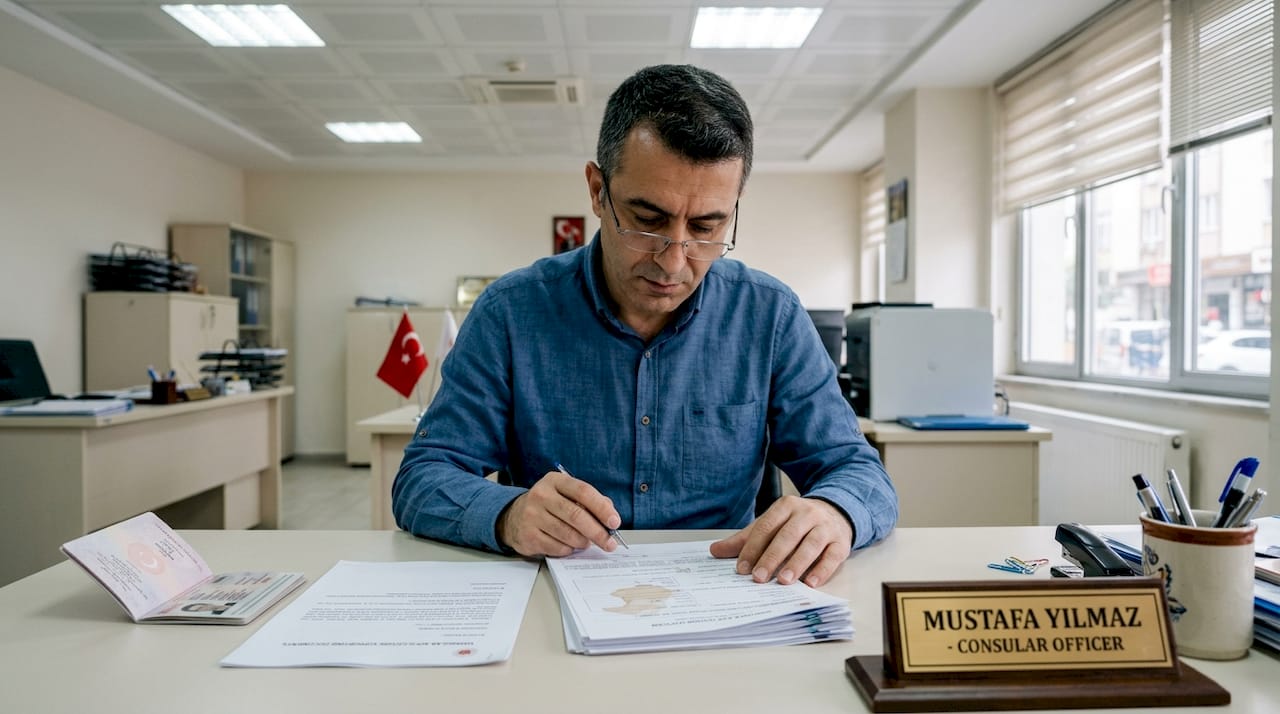
For a detailed walkthrough of the application process, the UK tourist visa guide covers every step from document preparation to what to expect at the biometrics appointment.
Family visa: A secure option for reunification (91% grant rate)
For Turkish nationals with a partner, spouse, or parent who is a British citizen or settled person in the UK, the Family visa offers a clear and well-supported route. Family visas for Turkish applicants have a 91% grant rate, based on 1,654 applications in the year ending September 2025.
That figure is reassuring, but it comes with an important caveat: the 9% refusal rate is almost entirely driven by applications that fail to meet the financial or relationship evidence requirements. Get those right, and your chances are strong.
To qualify for a UK Family visa, you will generally need to show:
- A genuine and subsisting relationship with a British citizen or person with settled status
- That your UK sponsor meets the financial threshold of £18,600 or more per year (higher if dependant children are included)
- Adequate accommodation in the UK that is not overcrowded
- English language ability at A2 level or above (for partner visas)
- Evidence of your relationship history, such as photographs, communication records, and joint documents
The Family visa is not just a temporary permission. It leads to a pathway of settlement. After living in the UK for five years on a Family visa, you become eligible to apply for Indefinite Leave to Remain (ILR), which grants permanent residency.
Pro Tip: Property inspection reports are often required for Family visa applications to confirm the UK property is suitable for additional occupants. This is a detail many applicants overlook until the last moment. Our family visa guide explains exactly what is needed.
Skilled worker visa: Viable for professionals
For Turkish professionals with a confirmed job offer from a UK employer, the Skilled Worker visa is the primary work route. Work visas generally carry approval rates of 90 to 98% overall, which reflects how well-structured the route is when applicants meet the requirements.
The challenge is not the approval rate once you apply. It is meeting the eligibility criteria in the first place.
To qualify for a Skilled Worker visa, you must have:
- A job offer from a UK Home Office licensed sponsor with a valid Certificate of Sponsorship (CoS)
- A role on the eligible occupations list
- A salary that meets the general threshold (currently £38,700 for most roles, or the going rate for your occupation)
- English language proficiency at B2 level (upper intermediate) or above, a requirement that tightened in 2026
- A valid passport and supporting identity documents
| Feature | Skilled Worker visa |
|---|---|
| Approval rate | 90 to 98% |
| Sponsor required | Yes (licensed UK employer) |
| Minimum salary | £38,700 (general threshold) |
| English requirement | B2 level |
| Path to settlement | Yes, ILR after 5 years |
The Skilled Worker visa leads directly to Indefinite Leave to Remain after five continuous years, making it one of the most valuable long-term routes available. For a full breakdown of eligible roles and salary thresholds, see the Skilled Worker visa guide and the Skilled Worker job list.
Visa comparison table: Which route is easiest?
To make things clearer, here is a concise comparison of the four main visa routes for Turkish applicants, based on grant rate data from the year ending September 2025.
| Visa type | Grant rate | Key requirement | Work permitted | Path to settlement |
|---|---|---|---|---|
| Student visa | 98% | CAS from licensed institution | Limited (20 hrs/week) | Via Graduate visa |
| Family visa | 91% | Relationship + £18,600 income | Yes | Yes, after 5 years |
| Visitor visa | 90% | Strong ties to Turkey | No | No |
| Skilled Worker visa | 90 to 98% | CoS + salary threshold | Yes (full time) | Yes, after 5 years |
The Student visa leads on raw approval rates, but it requires a confirmed university place. The Visitor visa is the most flexible entry point but offers no work rights. The Family and Skilled Worker visas offer settlement pathways but demand more documentation upfront.
The ‘easiest’ visa is the one you are most likely to qualify for given your current circumstances. A student with a university offer faces a very different decision from a chef with a UK job offer or a spouse joining a British partner.
A fresh perspective: The truth about ‘easy’ UK visas for Turkish applicants
Statistics are useful, but they can be misleading. A 98% grant rate on Student visas does not mean the visa is easy to obtain. It means that the people who apply are already well-qualified. Many Turkish applicants never reach the application stage because they cannot secure a university place or meet the English language requirement.
Similarly, the Skilled Worker visa’s high approval rate masks the difficulty of finding a licensed sponsor willing to hire from abroad. The bottleneck is not the Home Office. It is the job market.
One route that deserves more attention is the Turkish ECAA (European Communities Association Agreement) route, which offers self-employed Turkish nationals a path to establish a business in the UK without navigating the points-based system. It is underused and often overlooked, yet it can be a genuinely practical option for entrepreneurs and tradespeople.
Rule changes are also accelerating. English language thresholds, salary floors, and dependant restrictions have all shifted in the past 12 months. What was straightforward in 2024 may require more preparation in 2026. For a full picture of what is available, exploring UK visa types with up-to-date guidance is essential before committing to any route.
How METIN.LONDON can help with your UK visa application
Understanding your options is the first step. Navigating the actual application is where expert support makes a real difference.
METIN.LONDON is regulated by the Immigration Advice Authority (IAA) at Level 1, providing professional visa advice and application support for Turkish nationals. Whether you are applying for a Student visa, a Skilled Worker visa, or need help with a complex family case, our team handles the detail so you do not have to. We also support UK Tourist Visa applications and offer specialist guidance on dependent visa routes for families relocating to the UK. Speak to us before you apply.
Frequently asked questions
What is the easiest UK visa to get for Turkish nationals?
The Student visa currently has the highest grant rate at 98% for Turkish applicants, making it the statistically easiest route, provided you have a confirmed university place.
How long does it take to process a UK visa application from Turkey?
Most UK visas for Turkish citizens are processed within three weeks after submitting biometrics and supporting documents at a visa application centre.
Are visitor visas suitable for working or studying in the UK?
No. UK Visitor visas do not permit work or formal study. They are intended for tourism, short visits, family stays, and events only, as confirmed by visitor visa restrictions.
What financial requirements must be met for a UK family visa?
The UK sponsor must meet a minimum income of roughly £18,600 per year, with higher thresholds applying when dependant children are included in the application.
Do all Turkish nationals need a visa to enter the UK in 2026?
Yes. As of March 2026, all Turkish nationals are classified as visa nationals and must obtain a UK visa before travelling, regardless of the purpose of their visit.