Many Turkish nationals assume that applying for a UK visa is simply a matter of filling in a form and waiting. The reality is quite different. Eligibility rules vary significantly depending on whether you want to work, study, or join family in the UK, and a single missing document or unmet requirement can lead to a refusal. This guide breaks down the main visa routes, what you genuinely need to qualify, and how the process for Turkish nationals works from start to finish.
Table of Contents
- Who needs a UK visa and why eligibility matters
- Understanding the main UK visa categories
- Work visa eligibility: Skilled worker, shortage occupation and more
- Student visa eligibility: Studying in the UK as a Turkish national
- Family visas: Partner, spouse and dependent routes
- The application process: Steps, documents, and what to expect
- Common pitfalls and expert tips for Turkish applicants
- How expert help can make your UK visa journey easier
- Frequently asked questions
Key Takeaways
| Point | Details |
|---|---|
| Different visa types, different rules | Work, study, and family visas have unique UK eligibility requirements and documents. |
| Proof and preparation matter | Having the correct sponsor, funds, and English test results is essential for Turkish applicants. |
| Timing impacts approval | Apply up to three months early and double-check all evidence to avoid common refusal reasons. |
| Expert help boosts your odds | Specialist advice can simplify the process and increase approval success for complex applications. |
Who needs a UK visa and why eligibility matters
As a Turkish national, you need a visa to enter the UK for almost any purpose, whether that is working, studying, visiting, or joining a family member. Unlike EU citizens, Turkish nationals do not benefit from any automatic right to live or work in the UK. This means eligibility is not just a formality. It is the foundation of your entire application.
Eligibility is about more than gathering documents. It means meeting specific legal thresholds set by UK Visas and Immigration. Failing to meet even one core criterion, such as a minimum salary level or a language requirement, results in refusal. The most common reasons Turkish applicants are refused include incomplete evidence, unclear sponsorship, and insufficient funds.
Here is a quick summary of who typically applies and why:
- Work visas: Professionals with a job offer from a UK employer
- Study visas: Students accepted by a UK university or college
- Family visas: Partners, spouses, or dependents of British or settled residents
- Tourist visas: Short-term visitors with no intention to settle
Applications are submitted online via gov.uk, biometrics are completed at VFS Global in Turkey, and a TB test is required. Standard processing is 3 weeks for work and student visas, and 12 weeks for family visas.
Understanding the main UK visa categories
The UK visa system is points-based for most routes. Your purpose determines which category you fall into, and each category has its own set of requirements. Getting this right from the start saves time and money.
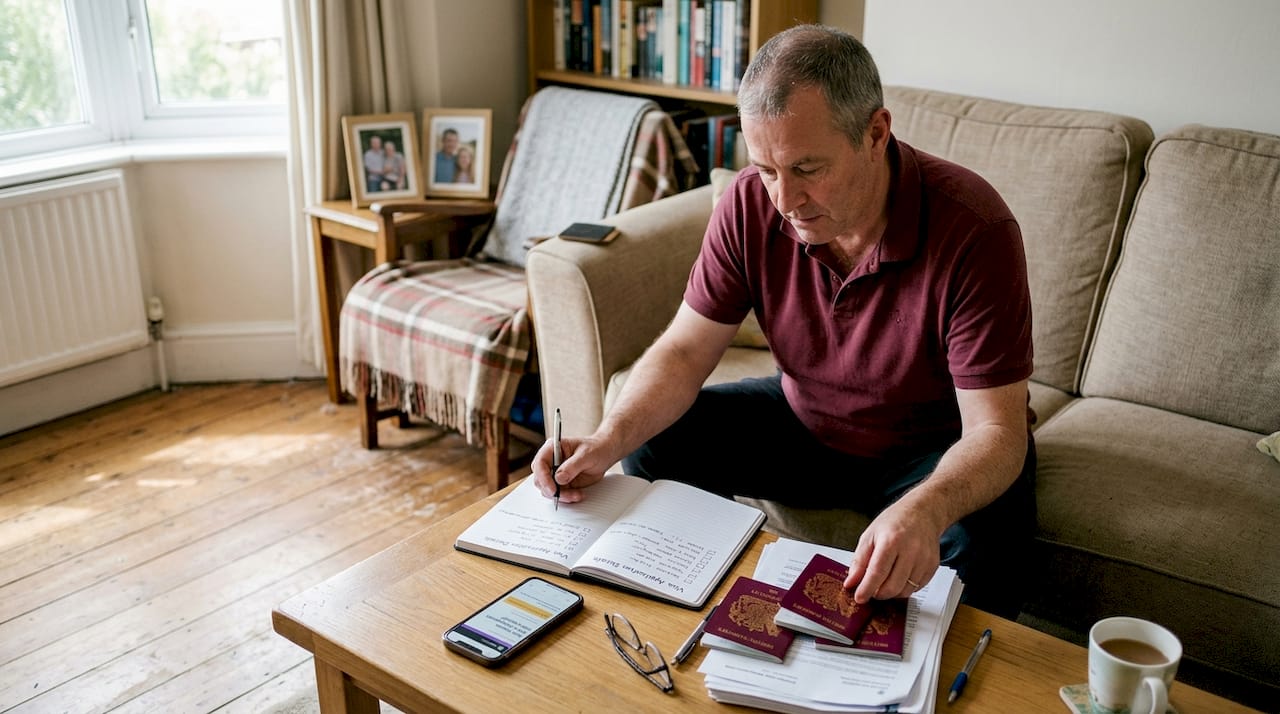
Here is a comparison of the three main visa types:
| Visa type | Key requirement | Processing time |
|---|---|---|
| Skilled Worker | Job offer, Certificate of Sponsorship, £38,700 salary | 3 weeks |
| Student | CAS from UK institution, proof of funds | 3 weeks |
| Spouse/Partner | UK sponsor earning £29,000+, genuine relationship | 12 weeks |
The skilled worker visa guide covers work routes in detail, but here is what each category broadly demands:
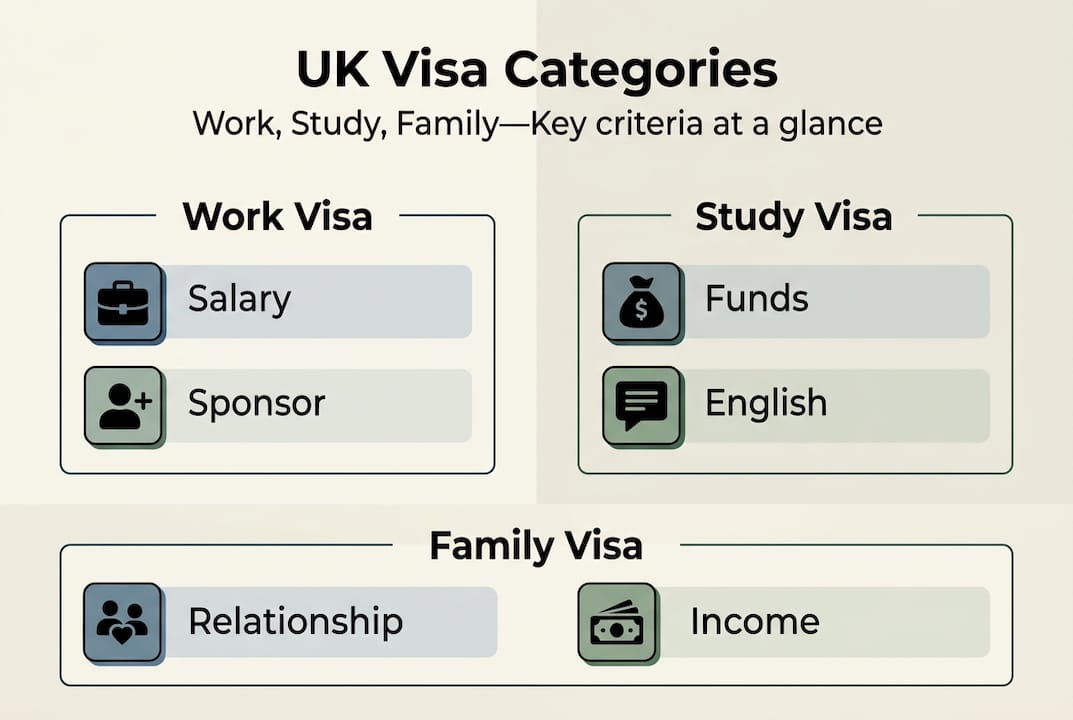
- Skilled Worker visa: A licensed sponsor’s job offer, a Certificate of Sponsorship, an eligible occupation at RQF level 3 or above, a minimum salary of £38,700, and English at B1 or B2 level
- Student visa: A Confirmation of Acceptance for Studies (CAS) from a licensed UK institution, proof of funds covering tuition and living costs of £1,334 per month in London or £1,023 elsewhere, and genuine student intent
- Spouse/Partner visa: A UK sponsor who is British or settled and earns at least £29,000 per year, proof of a genuine relationship, English proficiency, and adequate housing
Your purpose shapes every document you need. Applying under the wrong category, or misunderstanding what a category requires, is one of the most common and costly mistakes. The full immigration guide provides a broader overview if you are still deciding which route suits you.
Work visa eligibility: Skilled worker, shortage occupation and more
The Skilled Worker visa is the most common route for Turkish professionals moving to the UK. To qualify, you need a confirmed job offer from a UK employer who holds a valid sponsor licence. Without this, your application cannot proceed.
The key eligibility criteria are:
- A job offer from a licensed UK sponsor with a valid Certificate of Sponsorship
- An eligible occupation at RQF level 3 or above, or on the shortage occupation list
- A minimum salary of £38,700 per year (standard rate from 2024 onwards)
- English language proficiency at B1 or B2 level
- Sufficient funds to support yourself on arrival
The skilled worker salary requirements page explains how salary thresholds are calculated, including lower rates for shortage occupations and new entrants. Some healthcare roles, for example, have different salary benchmarks.
| Requirement | Standard threshold |
|---|---|
| Minimum salary | £38,700 per year |
| Occupation level | RQF level 3 or above |
| English level | B1 or B2 |
| Sponsor requirement | Licensed UK employer |
Pro Tip: You can apply up to 3 months before your intended start date. Applying early reduces the risk of delays affecting your employment start. Priority services are available for an additional fee if you need a faster decision.
Refusals at this stage are most often caused by a missing or invalid Certificate of Sponsorship, or a salary that does not meet the threshold. The full skilled worker guide walks through each requirement in plain terms.
Student visa eligibility: Studying in the UK as a Turkish national
If your goal is to study in the UK, the Student visa route is straightforward in principle but demanding in practice. Your eligibility hinges on three things: your institution, your funds, and your intent.
Here is what you need to do:
- Receive an unconditional offer from a UK institution with a Student sponsor licence
- Obtain your Confirmation of Acceptance for Studies (CAS) reference number
- Prove you have enough money: £1,334 per month in London or £1,023 per month elsewhere, plus your full tuition fees
- Meet the English language requirement for your course level
- Demonstrate genuine intent to study and return or comply with visa conditions
The funds must be held in your bank account for at least 28 consecutive days before you apply. This is a firm rule, not a guideline. Many applications fail because funds dip below the required level during this period.
Pro Tip: Check the English requirement for visas before booking your IELTS test. Different courses and institutions require different scores, and sitting the wrong test wastes both time and money. The IELTS for UK visas guide explains exactly which scores are accepted.
Genuine student intent is assessed through your personal statement and interview responses. Home Office caseworkers look for consistency between your academic background, your chosen course, and your future plans.
Family visas: Partner, spouse and dependent routes
Bringing a partner or family member to the UK involves one of the more demanding visa categories. The rules changed significantly in recent years, and the income threshold is now higher than many people expect.
To sponsor a partner or spouse, the UK-based person must:
- Be a British citizen or have settled status in the UK
- Earn at least £29,000 per year as of 2026
- Provide evidence of a genuine and subsisting relationship
- Show adequate accommodation for both parties
The applicant (the Turkish national) must also pass an English language test at A1 level for entry, and progress to higher levels at each renewal stage. The financial rules for family visas page explains how income is calculated, including whether savings can be used to top up a shortfall.
Pro Tip: Bank statements, payslips, and a tenancy agreement or property ownership document are the minimum evidence expected. Gaps in financial records or inconsistencies in relationship evidence are the most common reasons family visa applications are refused. The dependent visa rules page covers what children and other dependents need to apply.
Initial leave is granted for 2.5 years (or 3.5 years if your sponsor has indefinite leave to remain). After 5 years of continuous residence, you can apply for settlement.
The application process: Steps, documents, and what to expect
Regardless of which visa you are applying for, the process follows a similar structure for Turkish nationals.
- Complete your online application on gov.uk and pay the visa fee and Immigration Health Surcharge
- Book a biometrics appointment at VFS Global in Turkey
- Attend your appointment with your passport and supporting documents
- Complete a TB test at an approved clinic if required (mandatory for most long-term visas)
- Wait for a decision
Standard processing times are 3 weeks for work and student visas, and 12 weeks for family visas applied for outside the UK. These are targets, not guarantees. Complex cases or missing documents can extend these timelines significantly.
Priority processing is available for some visa categories and reduces the decision time to around 5 working days. This service costs extra but is worth considering if you have a firm start date for work or study.
Do not book non-refundable travel until you have received your visa decision. This is one of the most common and avoidable mistakes Turkish applicants make.
Common pitfalls and expert tips for Turkish applicants
Knowing the rules is one thing. Avoiding the mistakes that lead to refusals is another. Here are the issues we see most often:
- Missing or invalid Certificate of Sponsorship for work visa applicants
- Funds falling below the required level during the 28-day holding period for student visas
- Inconsistent relationship evidence for spouse and partner visa applications
- Incorrect English test scores or tests taken at unapproved centres
- Applying too late, leaving no buffer for delays or requests for further information
Pro Tip: Apply up to 3 months before your intended travel or start date. This gives you time to respond to any requests for additional documents without missing deadlines. Understanding UK visa timings in advance helps you plan your move without unnecessary stress.
Genuine intent is assessed across all visa categories. Caseworkers look at the consistency of your application, your ties to Turkey, and whether your plans make sense given your background. A well-prepared application tells a coherent story.
How expert help can make your UK visa journey easier
Navigating UK visa eligibility on your own is possible, but the margin for error is small. One misunderstood requirement or missing document can mean months of delay or an outright refusal.
At UK Visa Assistance, we are regulated by the Immigration Advice Authority (IAA) at Level 1 (Ref No. F202000206), which means you receive qualified, accountable advice at every step. We work with Turkish nationals across all main visa categories, from eligibility assessments and document reviews to full application support. Whether you are exploring self-sponsorship guidance as a business owner or need help with a global talent visa, our team provides clear, tailored guidance. Get in touch today to find out which route is right for you and how to give your application the strongest possible foundation.
Frequently asked questions
What is the minimum income required for a UK spouse or partner visa in 2026?
Your UK-based sponsor must earn at least £29,000 per year as of 2026. Savings can sometimes be used to supplement income if it falls slightly short.
How much money do I need for a UK student visa to study in London?
You must show at least £1,334 per month for living costs in London, plus your full tuition fees, held in your account for 28 consecutive days before applying.
How long does it take to get a UK visa from Turkey once I have applied?
Standard processing is 3 weeks for work or student visas and 12 weeks for family visas when applying from outside the UK.
Do I need to take an English language test for a UK visa?
Yes, most work, study, and family visas require you to prove your English at B1 or B2 level. The exact level depends on the visa category and your role or course.