TL;DR:
- UK offers high demand for skilled Turkish chefs with various visa pathways.
- The Skilled Worker visa requires a job offer, sponsor license, and salary above £29,000.
- Alternative options include Global Talent and Creative Worker visas for exceptional or temporary chefs.
The UK remains one of the most sought-after destinations for Turkish chefs, offering world-class restaurants, competitive salaries, and a vibrant food culture. Yet the immigration landscape has shifted considerably since 2025, and choosing the wrong visa route can cost you time, money, and opportunity. Whether you are a seasoned executive chef or a skilled line cook, understanding your options has never been more important. This article walks you through the key eligibility rules, the most relevant visa routes, and practical steps to give your UK culinary career the strongest possible start.
Table of Contents
- Key criteria for chefs: Eligibility, skills and sponsorship
- Skilled Worker visa: The main route and its hurdles
- Alternative immigration options: Global Talent & Creative Worker visas
- Staying compliant and making a successful move
- What most guides miss: How to future-proof your chef career in the UK
- Step forward with expert UK visa support
- Frequently asked questions
Key Takeaways
| Point | Details |
|---|---|
| Check latest eligibility | Chef visa rules changed sharply after 2025—review the official occupation, salary, and sponsor requirements before you apply. |
| Consider all visa options | Skilled Worker, Global Talent, and Creative Worker visas are all valid culinary routes in 2026 with different benefits. |
| Document and apply early | Gather all job offers, contract evidence, and language certificates in advance as extra checks are now common. |
| Stay compliant in the UK | Work only with licensed sponsors and track all changes to your job role and salary to protect your visa status. |
Key criteria for chefs: Eligibility, skills and sponsorship
Before you can pack your knives, you need to understand what the UK immigration system actually requires of you. The rules are specific, and the details matter enormously.
Chefs in the UK are classified under a precise occupational code. Chefs (SOC 5434) are eligible for the Skilled Worker visa as a Medium Skilled occupation at RQF Level 3, which is roughly equivalent to an A-level qualification or a recognised vocational certificate. If your training and experience align with this level, you are on the right track.
Key eligibility requirements include:
- A confirmed job offer from a licensed UK sponsor
- Evidence of skills at RQF Level 3 or equivalent (culinary certificates, work references, portfolio)
- English language proficiency at B2 level, mandatory from 2026
- A salary that meets the minimum threshold for your role
- A valid Certificate of Sponsorship from your employer
On the employer side, sponsorship is essential: employers need a valid Sponsor Licence to hire overseas chefs. This means you cannot simply apply for a job informally and expect to transfer later. Choosing an employer who already holds a Sponsor Licence saves weeks of delay.
The good news is that demand for skilled culinary professionals has risen sharply since the pandemic, as hospitality businesses scramble to fill persistent workforce gaps. You can explore options for finding UK chef jobs through dedicated platforms that connect Turkish professionals with licensed UK employers.
“Hospitality employers are actively seeking internationally trained chefs, but only those who arrive with the right documentation and credentials will secure the roles worth having.”
Pro Tip: Start building your evidence file now. Gather employment contracts, culinary diplomas, reference letters, and photographs of your signature dishes. A well-organised portfolio speeds up both the employer’s assessment and the Home Office review.
Skilled Worker visa: The main route and its hurdles
The Skilled Worker visa remains the primary path for most Turkish chefs coming to the UK, but it has become more competitive and tightly regulated than ever before. Understanding the process step by step is critical.
Here is how the process works in 2026:
- Secure a job offer from an employer holding a valid Sponsor Licence
- Receive a Certificate of Sponsorship (CoS) from your employer, which contains a unique reference number
- Check the salary requirement: the chef salary threshold is £29,000 or the going rate, whichever is higher, with RQF Level 3 skill evidence required
- Submit your visa application online, paying the relevant fees and the Immigration Health Surcharge
- Attend a biometrics appointment and await a decision, typically within three weeks
A significant development is the Temporary Shortage List. From July 2025, chef roles faced restrictions or removal from the Skilled Worker route for new applicants, but transitional provisions and the Temporary Shortage List allow applications until the end of 2026. This window is shrinking, so if you are eligible, now is the time to act.
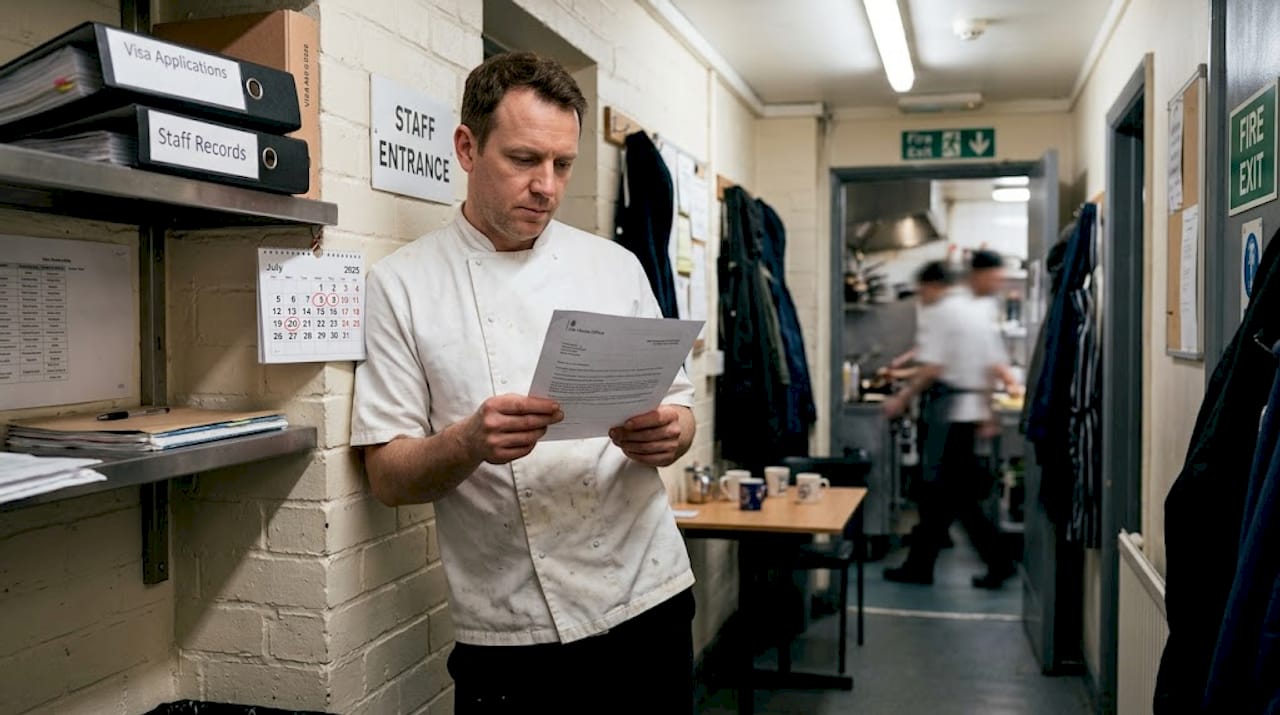
Another figure worth noting: over 226,000 Skilled Worker grants were issued in 2024, but refusal rates are climbing where salary or job descriptions do not match the stated role. Errors in paperwork are costly.
For a fuller breakdown of how all this fits together, the UK immigration guide for Turkish chefs covers each requirement in detail. You can also compare your personal situation against the best UK visa routes available to Turkish nationals.
Pro Tip: Before applying, have a solicitor or qualified immigration adviser review your contract and job description. A mismatch between your CoS and your actual duties is one of the leading reasons chefs receive refusals.
Alternative immigration options: Global Talent & Creative Worker visas
If the Skilled Worker route presents obstacles, two other routes deserve serious attention. They suit different profiles, but both are genuine pathways to working in the UK.
Global Talent Visa
This route is for chefs who have built a demonstrable reputation for excellence. The Global Talent Visa is possible for exceptional culinary artists via Arts Council England endorsement, with no sponsor needed. That last point is significant: you are not tied to a single employer, giving you far greater freedom to freelance, open your own pop-up, or work across multiple kitchens.
Creative Worker Visa
For shorter engagements, the Creative Worker Visa allows temporary culinary work if framed as a creative contribution, for example a residency, a themed dining experience, or a festival. It permits up to 12 months’ stay, extendable to 24 months.
Here is a direct comparison to help you decide:
| Feature | Skilled Worker | Global Talent | Creative Worker |
|---|---|---|---|
| Sponsor required | Yes | No | Yes (event organiser) |
| Minimum salary rule | £29,000+ | None | None |
| Duration | Up to 5 years | Up to 5 years | Up to 24 months |
| Settlement pathway | Yes (5 years) | Yes (3 years) | No |
| Flexibility | Low | High | Medium |
| Best suited for | Employed chefs | Award-winning chefs | Event or festival chefs |
Key considerations when choosing:
- Global Talent requires a strong, documented portfolio of leadership and recognition
- Creative Worker is short-term and does not lead to settlement on its own
- Skilled Worker offers the clearest path to indefinite leave to remain
For a detailed look at qualifying criteria, the Global Talent Visa guidance explains the endorsement process clearly. If you are further along in the process, mastering the talent visa process offers a more advanced walkthrough.
Staying compliant and making a successful move
Obtaining a visa is only the beginning. Maintaining your legal status requires ongoing attention, and the consequences of non-compliance are serious.
Once in the UK, both you and your sponsor have duties. The 226k grants in 2024 figure shows how many are succeeding, but chefs face higher refusal and curtailment risks when salary or job descriptions do not match the approved role. Employers must report changes to your role, salary, or employment status to the Home Office. If your sponsor fails to do this, your visa could be curtailed.
Here is a compliance checklist for the first months after arrival:
- Keep a copy of all visa documents in a secure location
- Notify your sponsor immediately if your job duties change significantly
- Ensure your salary payments match the amount stated on your CoS
- Track your visa expiry date and begin renewal at least three months early
- Avoid working for any employer not listed on your visa
Common refusal and success factors in 2024 to 2026:
| Refusal reason | Success factor |
|---|---|
| Salary below threshold | Salary at or above £29,000 |
| Job description mismatch | Role matches CoS exactly |
| Sponsor not licensed | Verified Sponsor Licence |
| Missing RQF evidence | Culinary qualifications included |
| Weak English evidence | B2 certificate from approved test |
For a broader view of how different visa categories perform, comparing UK visa success rates for Turkish applicants gives useful context. You can also broaden your planning by exploring UK visa types to understand how different routes interact.
Pro Tip: Create a simple spreadsheet to track every deadline: your visa expiry, your sponsor’s licence renewal, and any English language certificate expiry. Missing any one of these can trigger serious complications.
What most guides miss: How to future-proof your chef career in the UK
Most articles on this topic focus on a single route, usually the Skilled Worker visa, as if it were the only path. That approach is increasingly risky. The 2025 rule changes demonstrated just how quickly a “safe” visa category can be restricted or removed. Chefs who had banked everything on one route found themselves scrambling for alternatives with little time to prepare.
Our honest advice, drawn from working with Turkish professionals across multiple immigration cycles, is this: treat your visa strategy the way a great chef treats a menu. You always have a backup dish. Invest in your portfolio, your culinary reputation, and your English language skills simultaneously. These assets are transferable across multiple visa routes, from Skilled Worker to Global Talent. Understanding why working in the UK rewards long-term investment, not just short-term planning, changes how you approach the entire process. Adaptability is the real competitive advantage.
Step forward with expert UK visa support
Navigating the UK immigration system as a Turkish chef takes more than reading guides online. One misstep in your documentation or an incorrect salary figure on your Certificate of Sponsorship can result in a refusal that delays your plans by months.
At UK Visa Assistance, regulated by the Immigration Advice Authority (IAA) at Level 1, we specialise in guiding chefs and culinary professionals through every stage of the visa process. Whether you need help with your Skilled Worker application or want to explore whether the Global Talent Visa suits your profile, our team provides personalised advice that avoids costly errors. Learn more about our visa assistance services and take the next step with confidence.
Frequently asked questions
What is the minimum salary for a chef visa in the UK in 2026?
You must earn at least £29,000 or the going rate, whichever is higher, to qualify for the Skilled Worker chef visa under SOC code 5434.
Are there still visa options for Turkish chefs after July 2025?
Yes, though restrictions apply. Chef roles after July 2025 are limited, but the Temporary Shortage List allows certain applications through to the end of 2026.
Can Turkish chefs apply for the Global Talent Visa?
Yes. If you can demonstrate exceptional achievement in culinary arts, an Arts Council England endorsement grants access to the Global Talent Visa with no employer sponsor required.
What short-term options exist for festival or event chef work?
The Creative Worker Visa covers temporary culinary engagements framed as creative contributions, allowing up to 12 months, extendable to 24 months in certain circumstances.
Why are some chef visa applications refused?
The most common causes are salary figures that fall short of the requirement, a mismatch between stated duties and the actual role, or sponsor compliance failures reported during Home Office audits.
Recommended
- How to find UK jobs: A practical guide for Turkish newcomers
- UK Global Talent Visa Requirements (2026 Guide) – METIN.LONDON
- Top UK job sectors for skilled migrants: visa pathways
- UK immigration interview: what to expect in 2026
- AI for Business Owners: Transforming UK Hospitality – AI Management Agency